
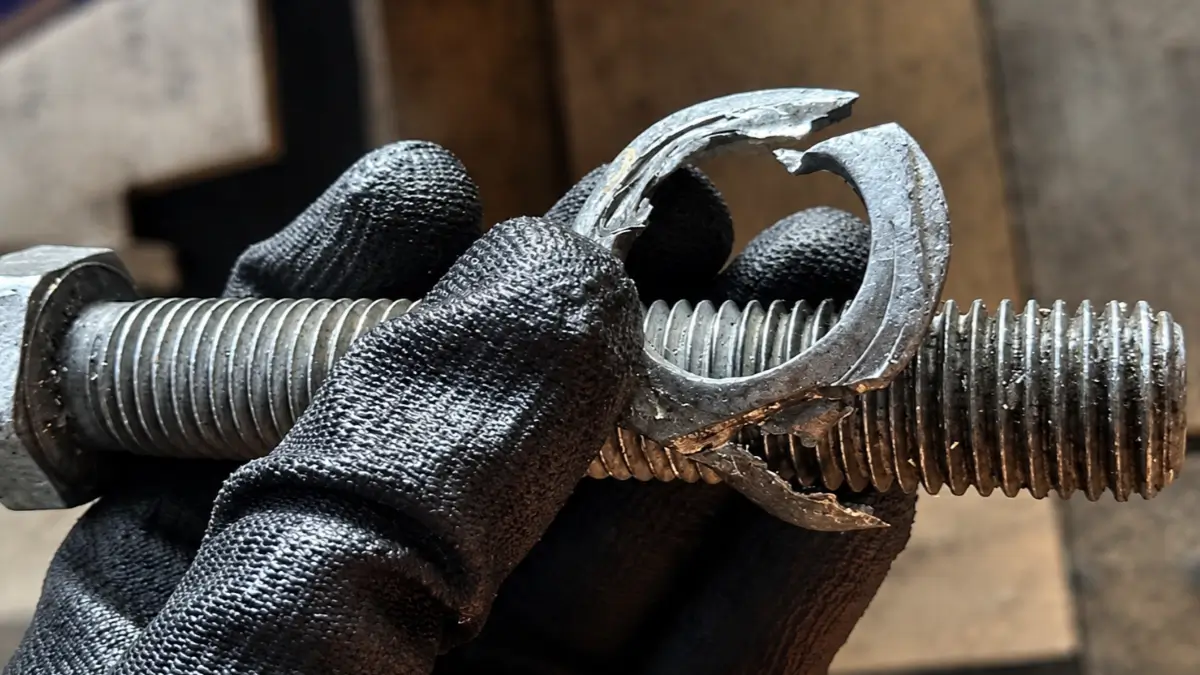
This image showing a damaged washer positioned underneath the motor frame. The deformed or damaged washer has affected the support condition of the motor, creating a soft foot condition and potentially influencing the accuracy of the motor-to-pump alignment. The image highlights the physical defect discovered during the alignment investigation and its possible impact on equipment stability and alignment.
Soft Foot Problem in Motor Pump Skid Alignment Caused by a Damaged Washer
Case Study: Hidden Washer Damage Behind Unstable Soft Foot Readings
When performing the laser shaft alignment of the motor and pump skid, we experienced difficulties with the soft foot condition. From the first laser alignment test, it turned out that the vertical and horizontal shaft alignment could be aligned according to the allowable values, but the soft foot readings were inconsistent and could not meet the client’s acceptable values at all times. At first, the issue was thought to arise from either the motor base, shimming, or motor mount condition.
This situation proves how important it is to check the motor mount installation (Bolts, Nuts, Washers) prior to the repeated shimming process.
The Soft Foot Problem
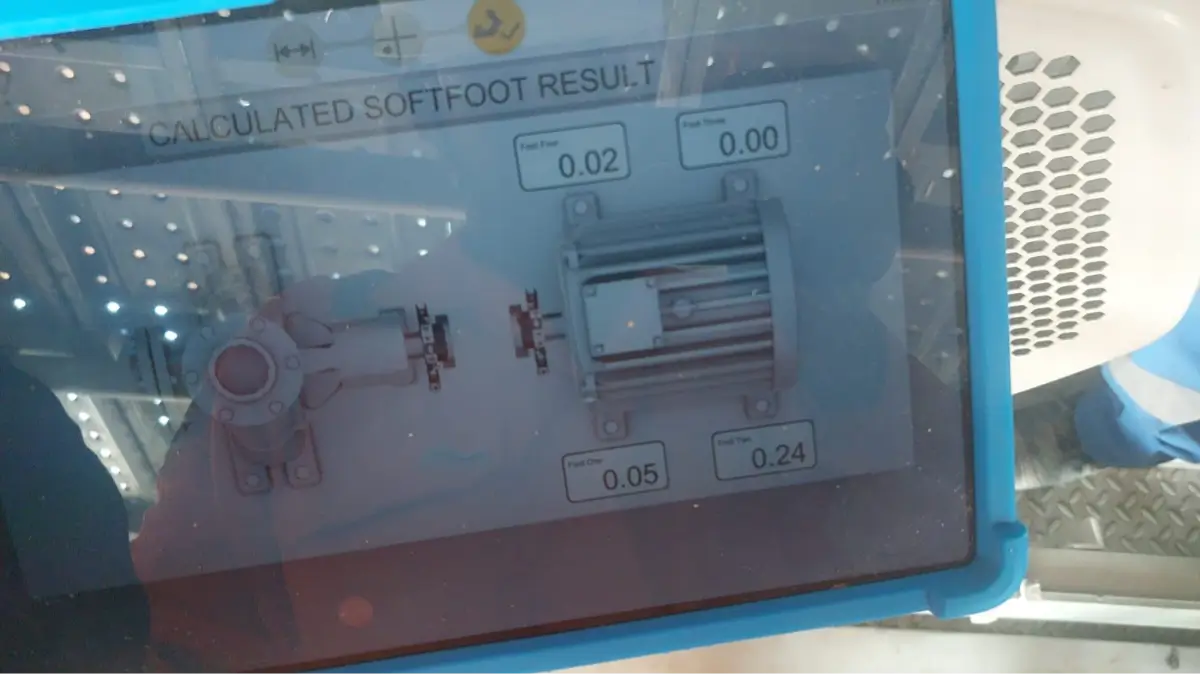
Initial verification of the Soft Foot Problem in Motor Pump Skid Alignment showing the measured soft foot value before correction. The damaged washers beneath the motor foot affected the seating condition and resulted in an abnormal soft foot measurement during the laser alignment process.
The process of aligning the motor pump involved correcting the alignment values both in the vertical and horizontal directions. Following the correction of these alignment values, acceptable values were obtained. However, on checking for soft-foot in the motor foot, the readings were not consistent.
A single motor foot was obtaining varying soft-foot readings in successive measurement attempts.
This presented a serious challenge, as follows:
– The soft-foot readings were inconsistent and not acceptable.
– Measurement in successive attempts was giving varying results.
– Further correction using the addition or removal of shims was not solving the problem.
– Further tampering with the shims could jeopardize the already aligned shaft values.
At this point, just carrying out further correction using shims was not the right solution to adopt.
Investigation of the Motor Base & Nut, Bolt, Washer & Base Frame
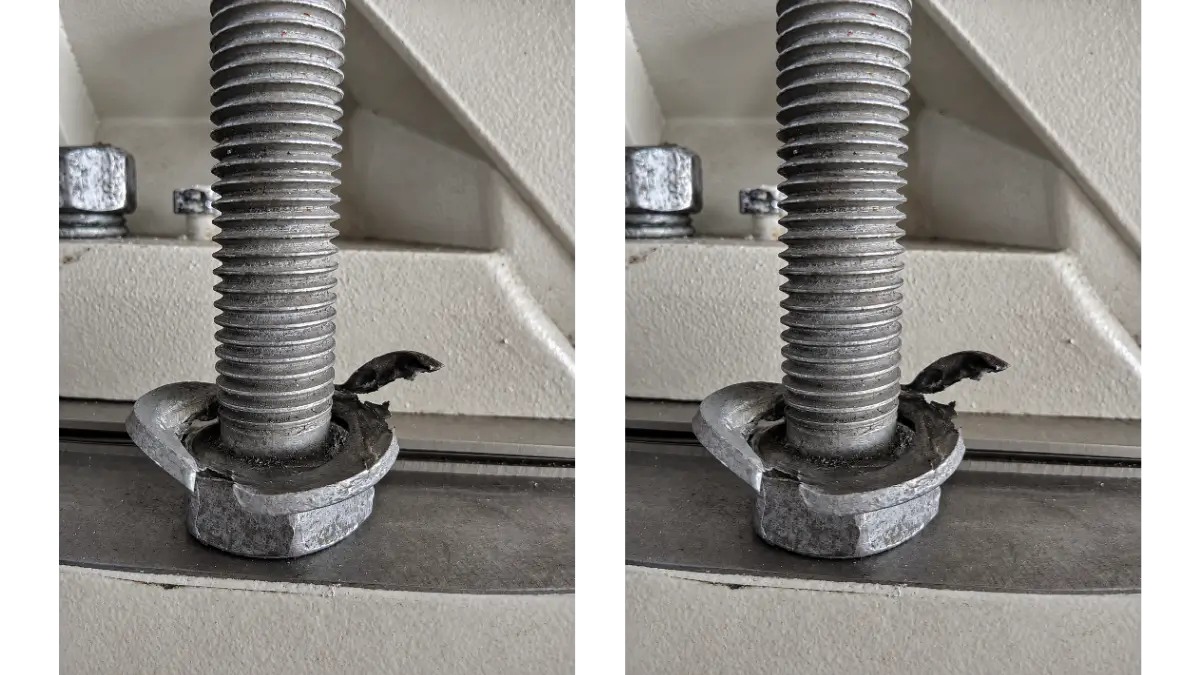
Close-up view of the damaged washer beneath the motor base bolt. The washer deformation affected the seating and support of the motor foot, contributing to the soft foot condition detected during the motor-pump laser alignment.
As the soft-foot values kept fluctuating, we decided to investigate the motor mounting system. In the process of investigation, we noticed a deformed/damaged washer below the motor base. The condition of the washer is shown in the picture.
The washer was deformed and damaged; therefore, the condition of the motor base at the point of mounting was not stable. This was a significant discovery since a reliable reading of soft-foot value is possible only when there is a stable mechanical condition of the motor foot.
Root Cause
The reason why there were irregularities in the soft-foot readings was because of the damaged washer that was located under the motor base. Since the washer was damaged, the seating of the motor mounting point was not stable at all.
Thus, whenever the motor mounting point is affected, and soft foot is taken again, the motor foot can settle differently. That is why different soft-foot readings were acquired. It was not just a case of adding or taking out shims; the mechanical condition of the motor mounting point should have been addressed first.
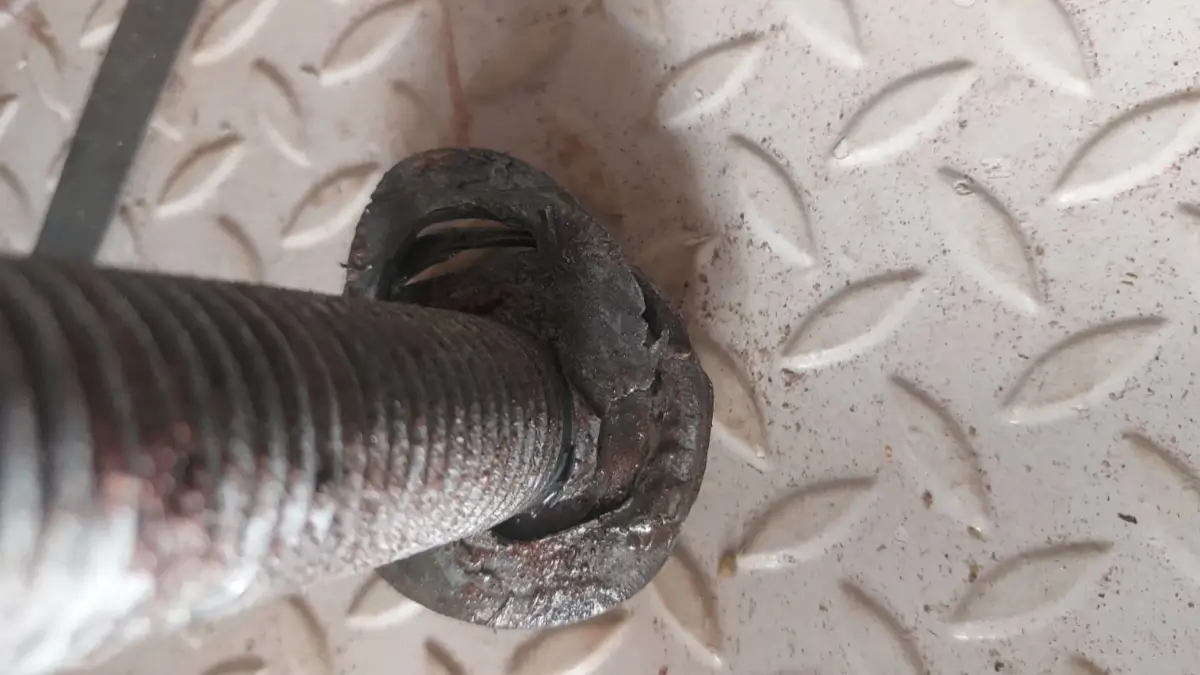
The image shows a damaged and deformed washer at the motor mounting point. The improper washer condition reduced the stability and uniform contact of the motor foot, contributing to the observed soft foot condition and affecting the alignment process.
Corrective Action
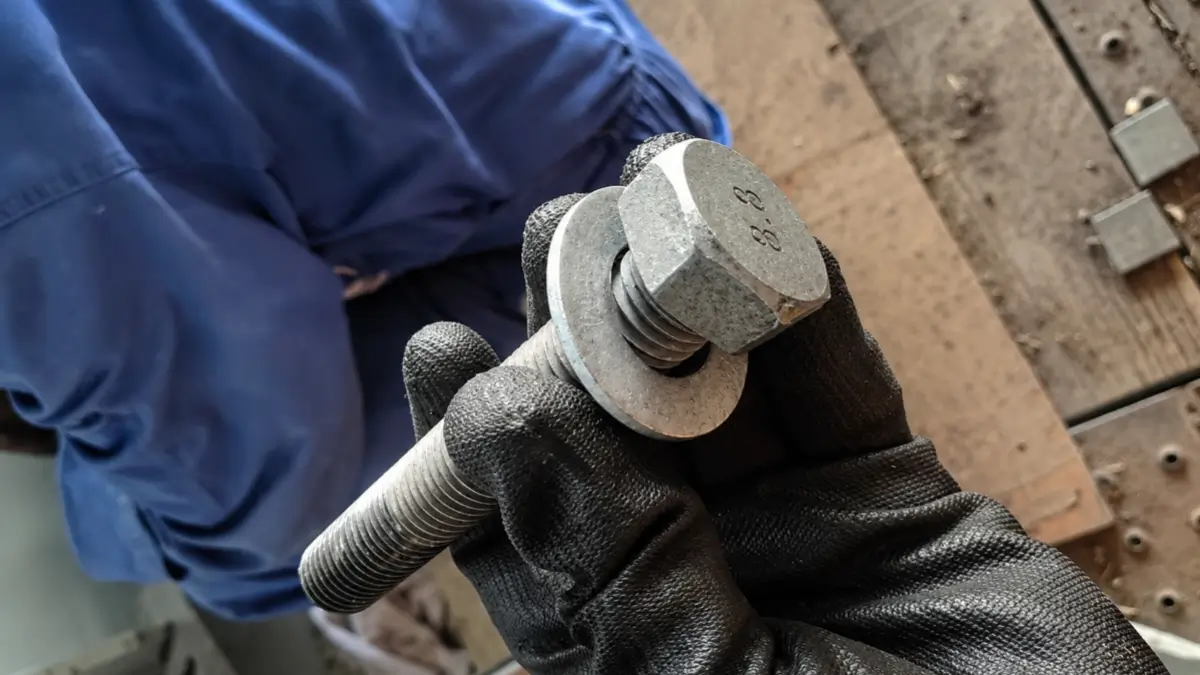
Close-up view showing the damaged washer replaced with a new washer beneath the motor frame bolt. The replacement restored proper support and seating of the motor foot, helping to eliminate the soft foot condition and improve the stability and accuracy of the motor-pump laser alignment.
Soft Foot Verification and Final Alignment
The old washer was removed and replaced by a new washer. The motor mounting was fixed after the installation of the new washer. The soft-foot testing was done again. After the installation of the new washer, the soft-foot readings were found to be constant. After the correction of the soft-foot problem, the laser shaft alignment was done.
Before and After Result
Before Washer Replacement
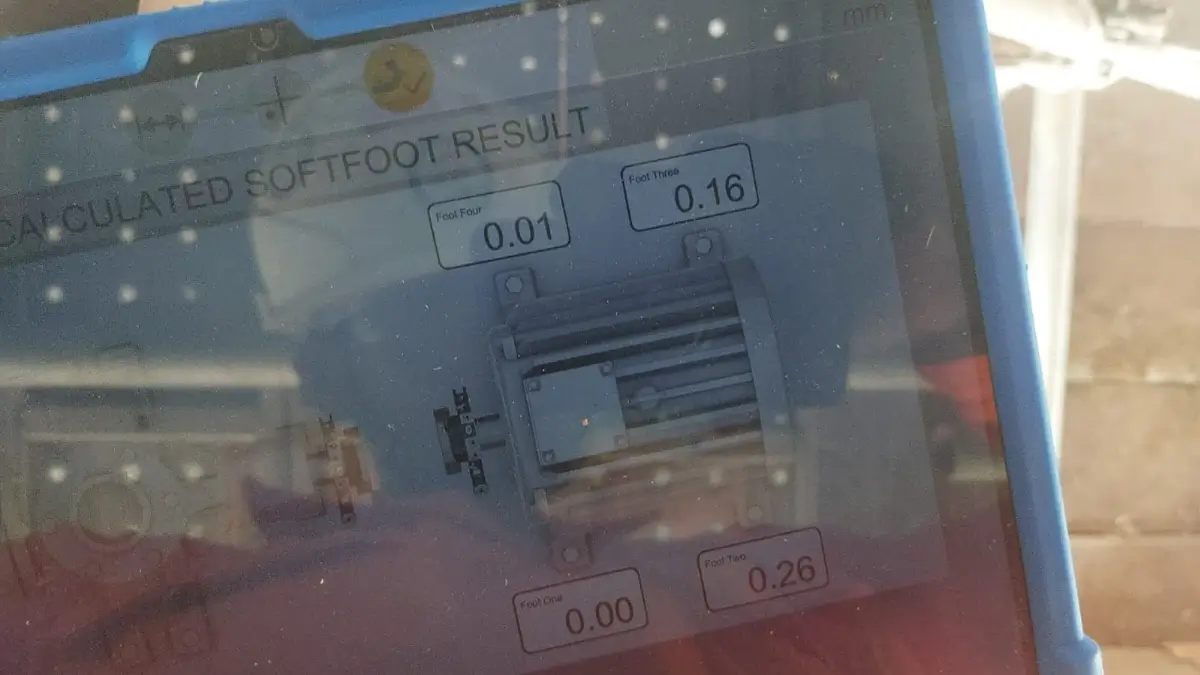
Second verification of the Soft Foot Problem in Motor Pump Skid Alignment showing a different measured value from the first check. The variation in the soft foot reading indicated an unstable or inconsistent motor foot seating condition, with the damaged shim contributing to the problem during the alignment investigation.
– Soft Foot: Unstable
– Multiple Measurements: Give different results
– Shimming: Has not solved the problem permanently
– Root Cause: The damaged washer under the motor frame
After Washer Replacement
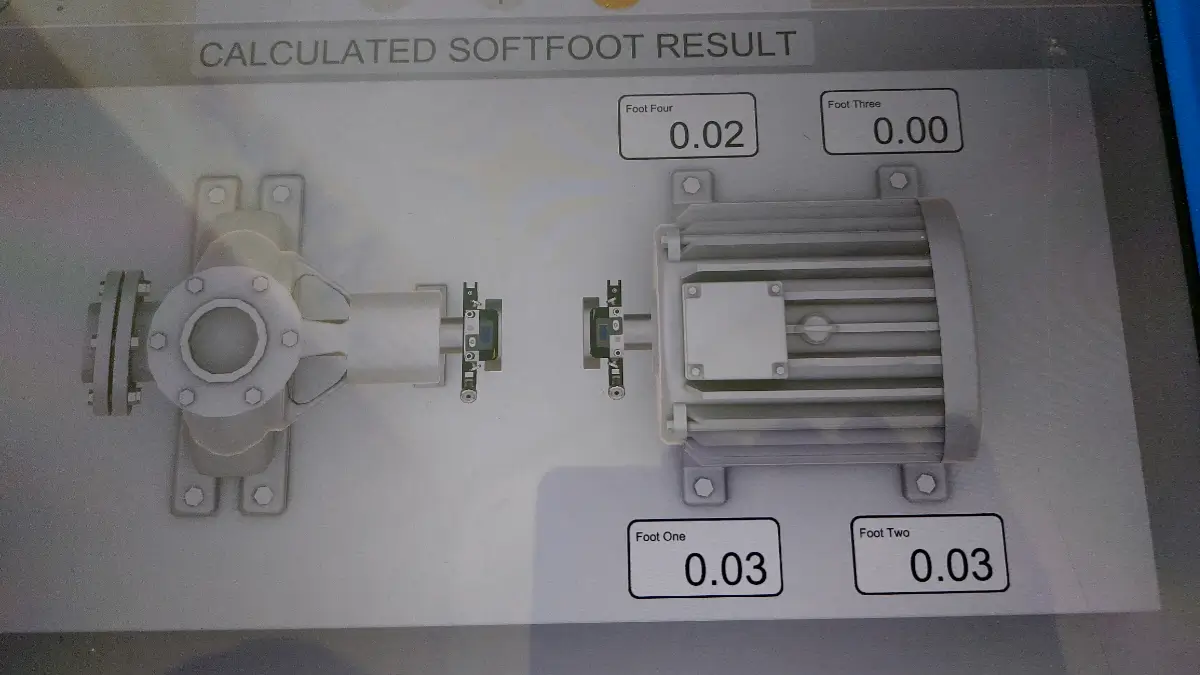
Final soft foot measurement after replacing the damaged washer and correcting the motor mounting condition.
Final soft foot measurement after replacing the damaged washer and correcting the motor mounting condition.
-Motor mount condition: Stable
-Soft-foot values: Uniform
-Soft foot: Adjusted to the client’s specification
-Shaft alignment: Carried out after adjustment of soft foot
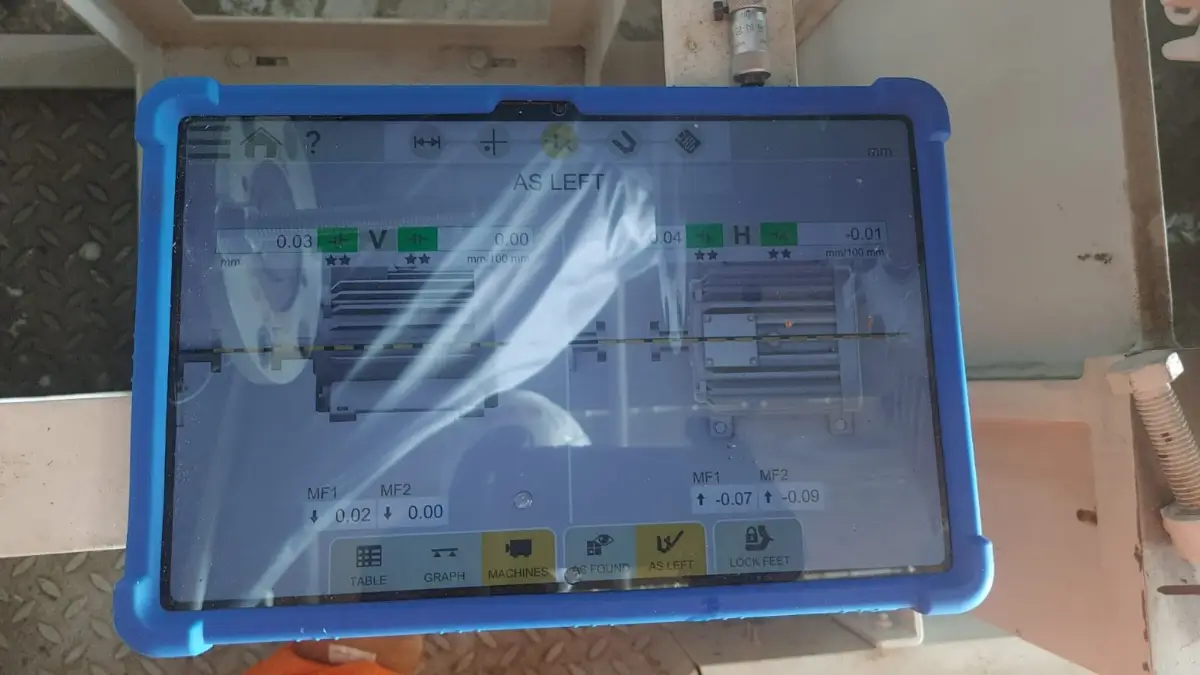
Reference image showing the client-required alignment tolerance limits for the motor-pump skid, including both horizontal and vertical tolerance values. These specified limits are used as client acceptance criteria during laser alignment to verify that the motor and pump shafts are correctly aligned and that the final alignment meets the project requirements.
Why Repeated Shim Correction Was Not the Solution
One of the important lessons learned from this alignment was that soft foot should not be considered a shim issue all the time. When any of the components like mounting surface, washer, bolt, motor foot, base frame, and mounting components are damaged or do not seat properly, the continuous change in the shims may cause some temporary or inconsistent results.
In this case, the damaged washer was causing the unstable mounting condition. If we would have kept changing the shim size without finding out about the damaged washer, then the soft-foot values would keep on changing and make the alignment process unnecessarily lengthy. This may also cause disturbance to the shaft alignment that is already within the required tolerance level.
Key Lesson for Laser Shaft Alignment
In order to have an accurate laser alignment process, there is more to having acceptable shaft offset and angularity measurements. The mechanical status of the machine also needs to be assessed.
Prior to doing the motor-pump alignment, the following should be assessed:
1. Motor base condition
2. Motor frame and mounting surface
3. Shims present
4. Washer condition
5. Bolt and nut condition
6. Motor foot to base contact
7. Soft-foot repeatability
8. Shaft alignment measurements
9. Torque and tightening condition
If there are significant changes in soft-foot measurements after repeating the measurements, do not automatically conclude that extra shimming is needed. Take a break from the process and assess the entire mounting system. A damaged washer, uneven mounting surface, loose hardware, burr, contaminants, or bad surface contact could cause unstable soft-foot measurements.
Conclusion
This case of motor-pump skid alignment provides a practical lesson on the fact that a soft-foot problem may be caused by a small mechanical part which is ignored during the alignment check process. In the case, the damaged washer under the motor frame led to unstable seating and different soft-foot values with multiple measurement attempts.
Following the replacement of the damaged washer, the soft-foot values became stable, and the motor was properly aligned to the customer’s required value. The case underscores the need for checking the mechanical status of the motor mounting system prior to making multiple changes to the shims.
In the case of professional laser shaft alignment, proper shaft alignment is only half of the work done. Stable machine mounting and repeatable soft-foot values are just as important.
Key Takeaway
When the alignment of the shaft is correct but the readings for soft foot keep varying, do not continue to add and remove shims. Check the mounting system of the motor including the washers, bolts, mounting surface, shims, and motor feet.