
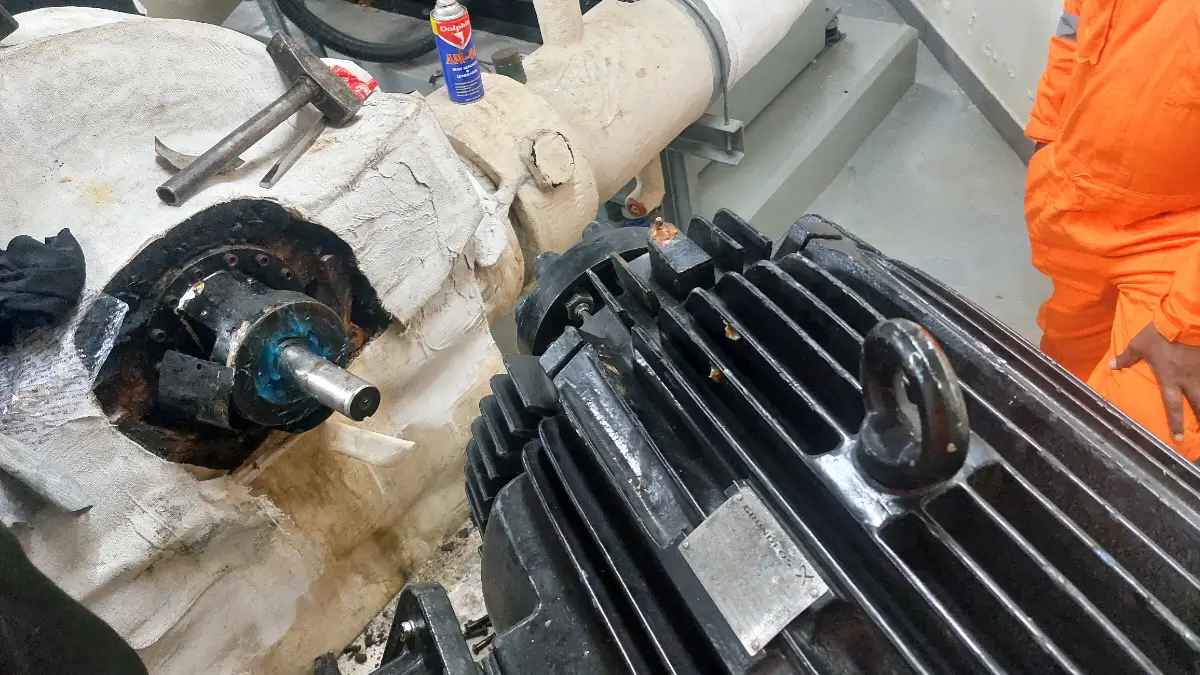
Pump and motor assembly shown after bearing replacement and before laser alignment. Proper alignment should be performed before returning the pump to operation to help prevent vibration, premature bearing wear, coupling damage, and equipment failure.
Don’t Run a Pump Motor After Bearing Replacement Without Laser Alignment
Case Study: Shim Correction Required After Pump Bearing Replacement
Though replacing a pump bearing seems to be a simple job for maintenance personnel, it may have an influence on the final shaft alignment and the interaction between the pump and motor. In the event of pump bearing replacement, it is not enough to mount the motor, fix it and use the machine without shaft alignment check.
In this particular case, the pump bearing replacement was done by another company for our customer. After bearing replacement, it was necessary to mount and align the motor with the pump. Our company was contacted to do laser shaft alignment before the operation of the pump-motor combination. During the alignment inspection, we noticed a discrepancy of 0.2 mm in shim setting under the motor feet after tightening all the bolts of both the pump and the motor bases.
The Situation
The pump bearing had been replaced as part of the client’s maintenance work. After the bearing replacement was completed, the motor was ready for installation and coupling alignment. Instead of starting the equipment immediately after mechanical assembly, the client arranged for a professional laser alignment check. Our team carried out the laser shaft alignment between the pump and motor. The initial measurements showed that the pump and motor were not within the required alignment tolerance. Both vertical and horizontal alignment conditions were checked and evaluated.
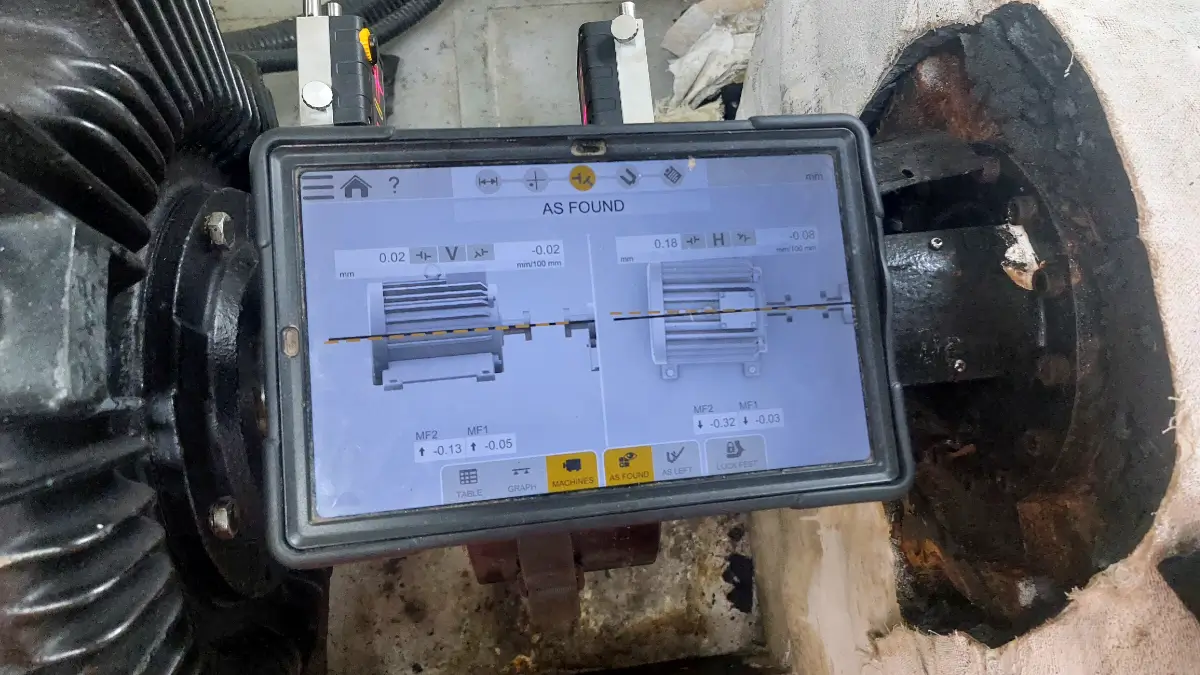
Laser alignment measurements are taken after pump bearing replacement and before final bolt tightening. Checking alignment at this stage helps identify shaft or foot movement and supports accurate pump motor alignment for reliable operation.
Alignment Inspection
The first thing to do was to determine the real shaft alignment situation when the pump and motor mounting bolts were tight. This is because an alignment check done without ensuring that the mounting bolts have been properly tightened may not give the right alignment situation of the machine. When all the pump and motor base bolts were properly tightened, it was found out that the alignment needed further correction.
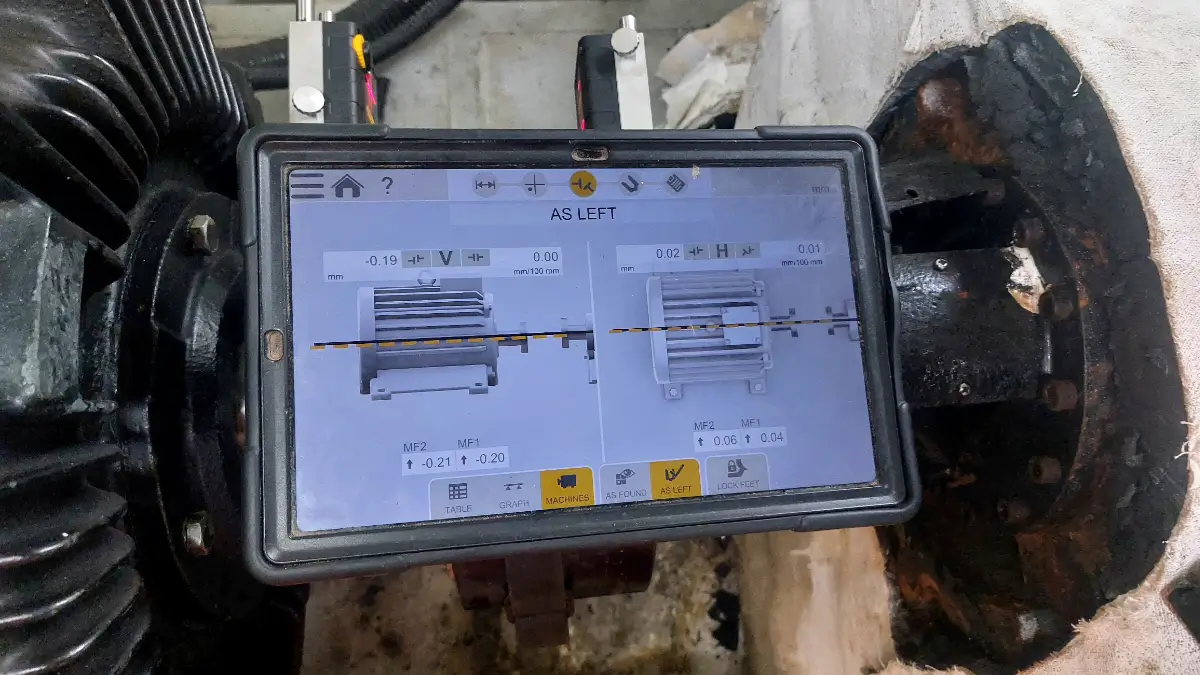
A pump and motor are being adjusted during laser alignment after a bearing change. Controlled bolt tightening and horizontal adjustment help maintain shaft alignment, reduce vibration, and prevent premature bearing and coupling wear.
During the inspection, it was discovered that there was 0.2mm correction in shims for the motor feet. This means that the motor cannot just be placed in its place and considered aligned. It had to be done through a controlled shim correction.
The 0.2 mm Shim Correction
Based on the laser alignment measurements, a 0.2 mm shim correction was added at the required motor feet. After installing the required shim correction, the motor was repositioned for horizontal alignment and the alignment was measured again. The horizontal and vertical alignment conditions were then corrected. A final laser measurement was carried out to confirm the result. The final alignment was achieved within the client’s required tolerance.
Why Alignment Was Required After Bearing Replacement
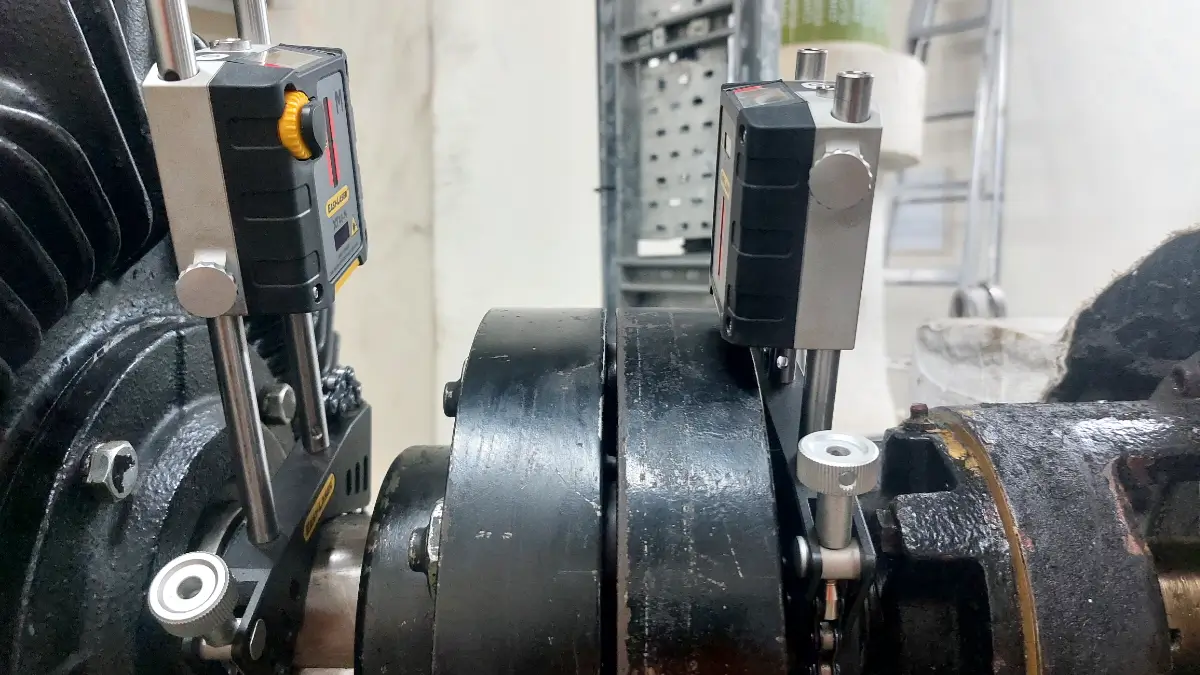
Laser shaft alignment is in progress on a pump and motor following bearing replacement. Precision laser measurements help correct horizontal and vertical misalignment, reduce vibration, and support reliable pump operation.
During the inspection, it was discovered that there was 0.2mm correction in shims for the motor feet. This means that the motor cannot just be placed in its place and considered aligned. It had to be done through a controlled shim correction.
Replacement of pump bearings may result in alteration in the position of the rotating shaft in relation to the pump housing and other connected equipment. Even if the process of replacing the bearing itself is done properly, it cannot be presumed that the final position of the pump shaft is the same as it was before.
Some other factors which affect the final alignment include:
– Bearing mounting
– Bearing seating
– Pump shaft position
– Condition of pump housing
– Mounting and assembly of the components
– Existing shims
– Condition of base
– Bolt tightening
– Thermal and mechanical considerations
Hence, the previous alignment condition cannot be taken for granted even after major pump repair.
What Could Happen If Alignment Is Skipped?
Operating a pump and motor without checking the shaft alignment could lead to unnecessary mechanical issues.
Misalignment might cause:
– Wear on couplings
– Loading on bearings
– Vibrations
– Mechanical stresses
– Premature bearing failure
– Seal failures
– Damage to couplings
– Decreased reliability of the equipment
– Unscheduled maintenance
The equipment could be operational after installation, but operation does not mean that the machine is properly aligned. The machine could be operational even though it has a misalignment problem that decreases the lifespan of bearings, couplings, or seals.
Laser Alignment Before Commissioning
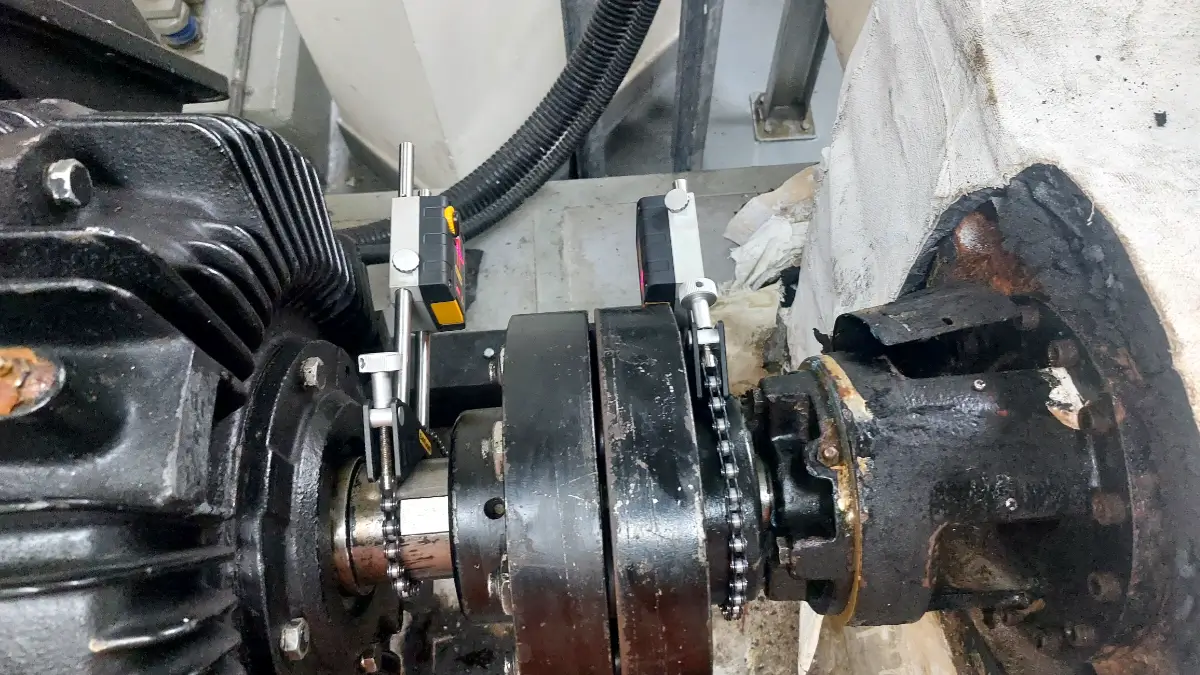
Precision laser measurement is in progress on the pump and motor shaft after bearing replacement. The measurements help identify and correct shaft misalignment, supporting accurate alignment, reduced vibration, and reliable pump operation.
In this example, the laser alignment test revealed a correction that would otherwise have gone undetected. The needed correction was about 0.2 mm at the motor mount points Following the correction, the alignment of the pump and motor shafts fell within the specified tolerances by the client. This is an illustration of the need to consider laser alignment as part of the commissioning process after replacing pump bearings.
Final Result
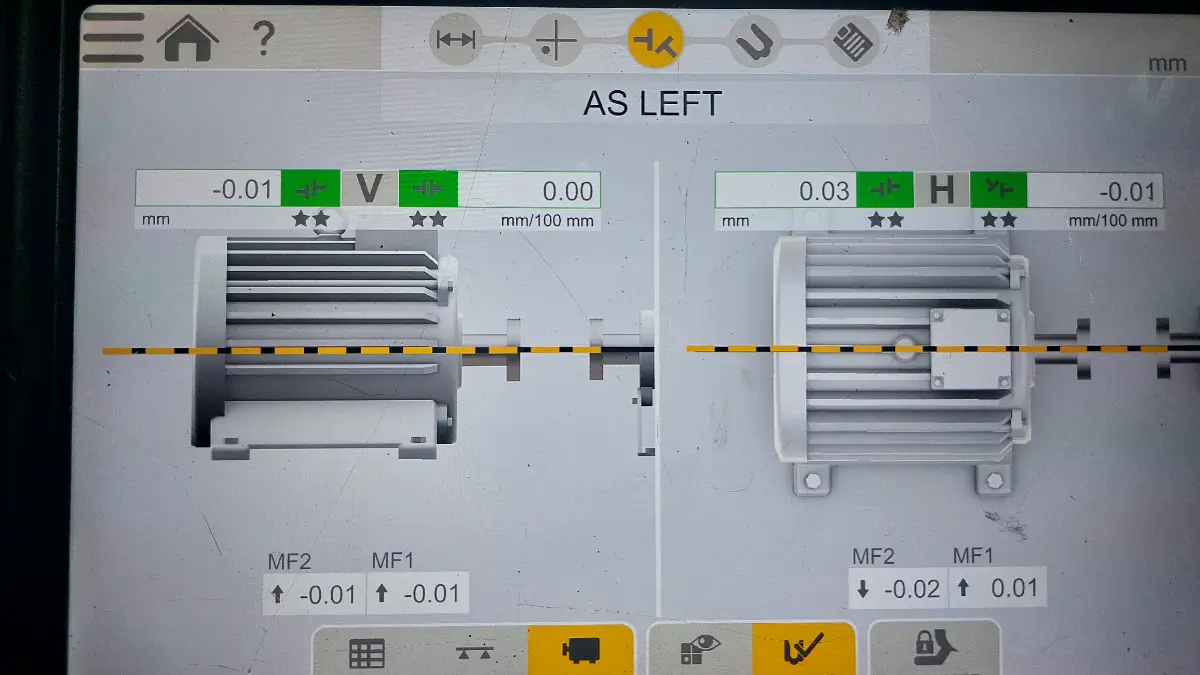
Image showing the tolerance of after alignment.
After the required shim correction was installed:
Initial condition:
– Pump bearing replaced
– Motor ready for installation
– Alignment outside the required tolerance
– Approximately 0.2 mm shim correction identified
Corrective action:
– Required shim correction added
– Motor position corrected
– Horizontal alignment corrected
– Vertical alignment corrected
– Final laser measurement performed
Final condition:
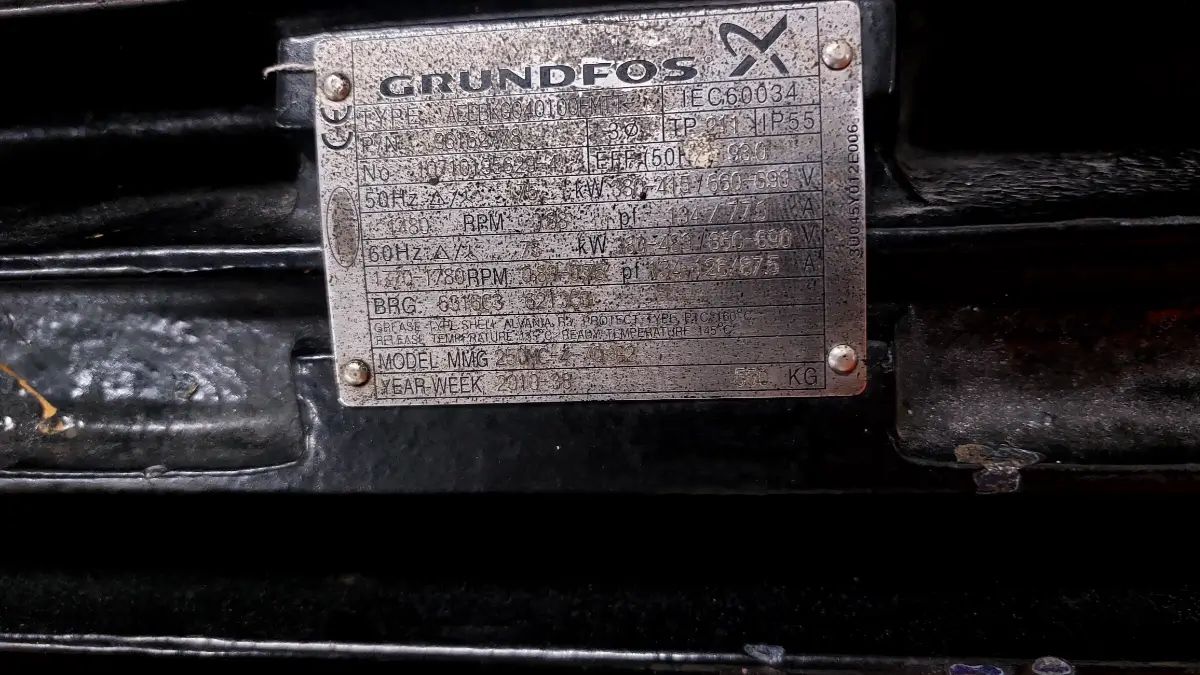
Motor nameplate shown for the pump motor that underwent laser shaft alignment service after bearing replacement. The nameplate provides the motor’s key identification and technical specifications.
– Pump and motor alignment achieved within the client’s required tolerance
– Equipment ready for operation following completion of the required mechanical checks
Key Lesson
Do Not Assume Previous Alignment to Be Correct. One of the most important takeaways from this case study is very simple:
After pump bearing replacement, do not assume that the pump-motor alignment remains correct. The replacement of the bearing and following mechanical work may alter the final position of the shaft. Laser alignment test gives you a precise measurement of the alignment between the pump and motor and not the assumption. In our particular case, the laser alignment test revealed that a correction of 0.2 mm shim was needed to meet the customer’s tolerance for alignment.
Our Recommendation
Replacement of a pump bearing always requires that the following procedure should be followed before the machine can be put back into operation:
1. Complete the pump bearing replacement.
2. Reinstall and secure the pump and motor.
3. Fully tighten the relevant mounting bolts according to the approved procedure.
4. Check the pump-motor shaft alignment using a laser alignment system.
5. Measure both vertical and horizontal alignment.
6. Make the required shim and positional corrections.
7. Recheck the alignment after corrections.
8. Confirm the final readings against the client’s specified tolerance.
9. Complete the final alignment report before commissioning.
Conclusion
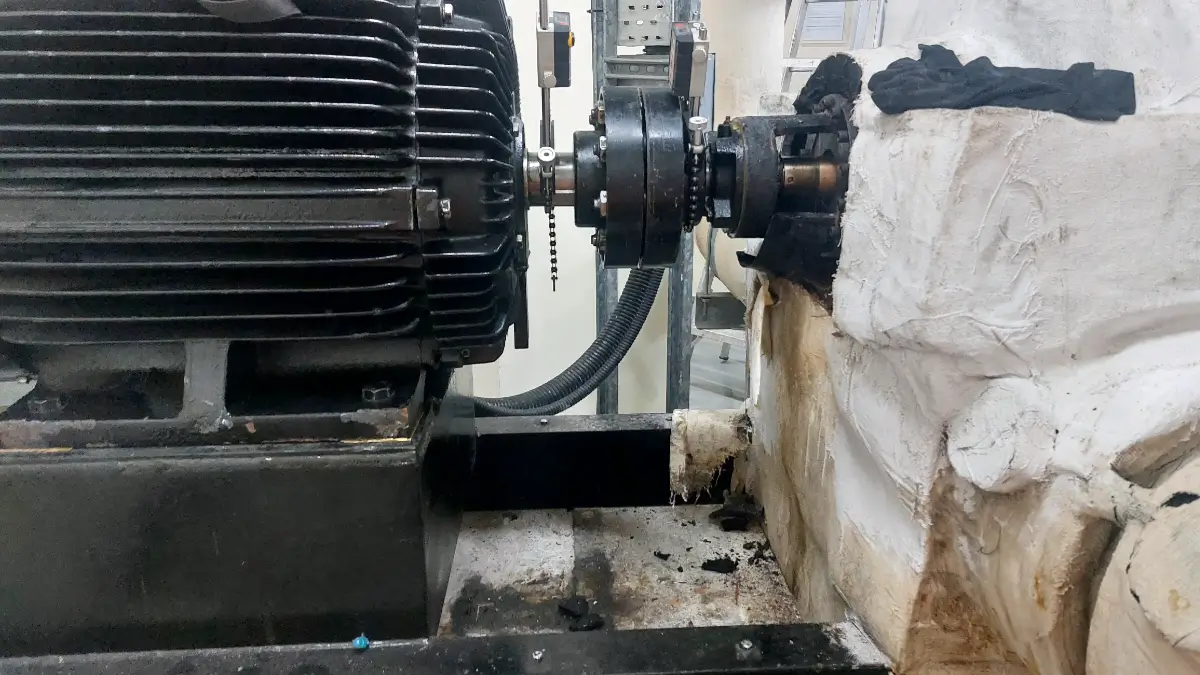
A professional laser alignment setup being used after pump bearing replacement to accurately align the pump and motor shafts. Proper laser alignment helps prevent vibration, premature bearing wear, coupling damage, and unexpected pump downtime.
Replacement of the bearings in the pump does not necessarily imply that the maintenance process is complete. The relationship between the pump and motor must be evaluated prior to commissioning the equipment. In this case, the laser shaft alignment examination revealed that there was a need for a correction of approximately 0.2 mm shim on the motor mounting areas. Once the correction had been done, the shaft alignment was brought within the client’s acceptable tolerance.
The case demonstrates a simple but important maintenance principle:
Don’t run a pump motor after bearing replacement without verifying the pump-motor laser alignment.
A few hours spent checking and correcting alignment can help prevent much more expensive problems caused by premature bearing, coupling, seal, and vibration-related failures.